Category: Weddings

  • Wedding First Dance Songs and the Evening Playlist That Follows

    Wedding First Dance Songs and the Evening Playlist That Follows

    Quick answer:
    The best wedding first dance songs are ones that mean something to you, sit at a tempo you can sway to and run two to three minutes. Popular choices include “Perfect” by Ed Sheeran and “At Last” by Etta James. Ask your DJ to trim the intro and plan the evening playlist alongside it.

    Your first dance lasts about three minutes, yet it sets the tone for the whole evening. Pick the right wedding first dance songs and your guests lean in, phones come out and the room warms up before the DJ has played a single floor filler.

    I have played for couples across Sussex, Surrey and Hampshire for many years, and the same pattern shows up every time. The couples who plan the first dance and the evening playlist together get a dance floor that stays full. The ones who treat them as two separate jobs often end up with a lovely moment followed by an awkward silence.

    This guide covers both halves: how to choose your first dance song, and how to build a wedding playlist that carries the night from that first slow song to the last chorus.

    What Are the Best Wedding First Dance Songs?

    The best wedding first dance songs are the ones that mean something to the two of you, run at a tempo you can sway to, and sound good in a room full of people. There is no official list. A song from your first holiday beats a chart favourite you have never heard before.

    That said, certain songs come up again and again because they work. They have a clear steady beat, a recognisable intro and an emotional lift in the middle. A few that I see regularly:

    • “Perfect” by Ed Sheeran
    • “At Last” by Etta James
    • “Can’t Help Falling in Love” by Elvis Presley
    • “Thinking Out Loud” by Ed Sheeran
    • “A Thousand Years” by Christina Perri
    • “Make You Feel My Love” by Adele
    • “L O V E” by Nat King Cole
    • “Marry You” by Bruno Mars

    If your favourite is on that list, great. If it is not, do not worry. The couples people remember are usually the ones who chose something personal. For more ideas on how to make an entrance before the dance begins, take a look at my guide to the 20 best song ideas for your grand entrance.

    How to Choose Your First Dance Song

    Start with the story, not the chart. Ask each other three simple questions: what song was playing when we met, what song do we both sing along to in the car, and what song would we be happy to hear in front of everyone we love.

    Then run a practical check:

    • Tempo. A very slow ballad can feel long when you are standing in front of 100 people. A mid tempo song gives you room to sway, turn and smile.
    • Length. Most original versions run three to five minutes. That is a long time if you are not planning choreography.
    • The intro. A long instrumental opening is lovely on a record and awkward on a dance floor. Ask your DJ to trim it.
    • Lyrics. Read them properly. A few songs that sound romantic are actually about heartbreak or leaving.
    • The room. A big barn venue suits a song with a big chorus. A small manor house room suits something intimate.

    If you cannot agree, shortlist three songs each and play them in the car for a week. The song that survives is usually the right one.

    Wedding First Dance Songs by Style

    Every couple is different, so here is a way to browse by mood rather than by genre.

    Classic and Timeless

    Think Etta James, Nat King Cole, Frank Sinatra and Ella Fitzgerald. These suit traditional venues, black tie weddings and couples who want a more elegant first dance. They also work well when grandparents are watching, because everyone knows the words.

    Modern and Romantic

    Ed Sheeran, Adele, John Legend and Lewis Capaldi sit here. These are the songs most guests will sing quietly along to. They also give you a strong build, so the second half of the dance feels bigger than the first.

    Fun and Upbeat

    Not everyone wants a slow dance. If you would rather laugh your way through, choose something with energy such as “Marry You” or a feel good classic from the sixties or seventies. The room relaxes quickly when the couple look like they are enjoying themselves.

    Rock and Alternative

    Plenty of couples choose a rock ballad or an acoustic version of a guitar song. Fleetwood Mac, Coldplay and Oasis all work well if you pick the right track. Ask me for the slower versions, because a few of these songs are far louder than they are romantic.

    Surprise First Dance

    Some couples start slow and then switch into a second song halfway through. It is a brilliant way to bring your guests onto the floor, because the mood changes and nobody has to be dragged up. If you want to try this, tell me early so I can plan the mix.

    Where the First Dance Fits in Your Wedding Timeline

    Most couples hold the first dance at the start of the evening reception, soon after the speeches and the evening guests arriving. If you are not sure how the day flows, my wedding timeline guide shows where the first dance usually lands and what happens either side of it.

    A typical run looks like this:

    1. Evening guests arrive and find a drink.
    2. I announce the first dance and the room gathers round.
    3. The couple dance alone for around a minute.
    4. I invite parents, the wedding party and then everyone else to join in.
    5. The tempo lifts gently and the dance floor opens up.

    That fourth step matters more than most people realise. If the first dance song ends and the next song is a heavy club track, half the room will head to the bar. A smooth hand over keeps people on the floor.

    Edits, Fades and Mashups: Making the First Dance Song Work

    Your DJ can shape the song to fit the moment. Here are the options I offer most often:

    • Trim the intro so you are dancing within a few seconds.
    • Shorten the song by cutting a verse, which keeps the moment tight.
    • Fade into a second song so the room moves straight from slow to lively.
    • Join two songs if you want a calm start and an upbeat finish.

    None of this needs fancy equipment on your side. Send me the songs well before the wedding and I will prepare the edit and play it back for you at your consultation. If you would like to meet in person, I welcome appointments at my Storrington office, and you can find the details on my contact page.

    Building Your Wedding Evening Playlist

    A great wedding playlist is not a list of favourite songs. It is a journey with a start, a build and a finish. The first dance is just the doorway into it.

    I split the evening into five parts.

    1. Arrival and Background Music

    While guests settle in and chat, the music should lift the mood without competing with conversation. Easy listening, soul, acoustic covers and gentle pop work well. If you have booked a full day service, I can also look after your ceremony and wedding breakfast music, which you can read about on my all day wedding services page.

    2. The First Dance and Family Dances

    This is the emotional centre of the night. Keep it simple and let the moment breathe. If you would like a parent dance, tell me in advance so I can have the second song ready.

    3. The Warm Up

    This is where many weddings stumble. The warm up should be familiar, easy to sing and not too fast. Think Motown, disco classics, Abba and singalong pop. These songs bring out the first brave dancers, and they are the people who bring everyone else along.

    4. The Peak

    Now the dance floor can take bigger tunes. I read the room and move between decades, so a nineties anthem can sit next to a current chart hit and a seventies classic. This part of the night is where my nightclub quality sound and lighting really earn their keep. For ideas on keeping people on their feet, have a look at my blog on how to keep the dance floor packed.

    5. The Last Hour and Final Song

    The final hour is for the songs everybody knows. Let the room sing, let the circle form and let the last song be one you are all happy to scream along to. Plenty of couples choose a big singalong closer such as “Mr Brightside” or “Sweet Caroline”, but the best final song is whichever one makes you smile.

    Songs That Fill the Dance Floor for Every Age Group

    A wedding is one of the few events where three or four generations dance together. A good playlist respects that. Here is how I balance a mixed crowd.

    DecadeReliable Floor FillersWho Gets Up
    1960s and 1970sMotown, Abba, Bee Gees, Earth Wind and FireGrandparents, parents, aunts and uncles
    1980sWhitney Houston, Madonna, Kylie, QueenParents and older friends
    1990sSpice Girls, Oasis, Backstreet Boys, Robbie WilliamsAlmost everyone
    2000sBeyoncé, Kanye West, The Killers, RihannaFriends and cousins
    2010s and nowBruno Mars, Dua Lipa, Harry Styles, Ed SheeranYounger guests and the brave

    You do not have to pick a song from every decade. But if one age group is missing from your playlist, expect them to sit down. My article on UK charts explains how music from different eras still lands with different crowds.

    Your Do Not Play List

    A do not play list is just as important as a must play list. Every couple has songs they cannot stand, songs that remind them of someone, or songs that have been played at every wedding they have attended this year.

    Here is how I suggest approaching it:

    • Keep the list short. Ten songs is plenty.
    • Include any song that carries a difficult memory.
    • Name the songs rather than the genre, so I know exactly what to avoid.
    • Tell me about the “cheese” you do want. Some couples love the Macarena and Agadoo, and I am more than happy to play them.

    My promise is simple. No corny tunes unless you ask for them. If you want to understand how I handle guest requests during the night, read my post on taking requests.

    Common Wedding Playlist Mistakes

    After years behind the decks, I see the same mistakes over and over.

    Too many slow songs. A single ballad is lovely. Three in a row will empty a dance floor.

    All the songs you love, none that your guests know. Your cousin may adore a tune from your favourite indie band, but the room needs to recognise most of what plays.

    Relying on a streaming playlist. Streaming apps can drop a connection, play adverts or fade between songs at the wrong time. I explain this in more detail in my post on why you should not rely on Spotify.

    No flexibility. A playlist should guide the night, not lock it. The best nights happen when your DJ can read the room and adapt.

    Leaving it to the last week. The more time I have, the better the mix. Aim to send your first dance, must plays and do not plays at least a few weeks ahead.

    Wedding Reception Music in Sussex Venues

    Venue matters more than most couples realise. Sussex has a huge range of settings, from country houses and converted barns to marquees on private land and golf club function rooms. Each one sounds different.

    A barn with high ceilings and bare walls can echo, so I adjust the speakers and the volume to keep lyrics clear. A marquee tends to swallow sound, so I position the system carefully. Some historic houses have sound limiters that cut the power when the music gets too loud, and I set up around them so the night never stops mid chorus.

    I have played at venues such as Bignor Park and many others across West Sussex, Surrey and Hampshire. If you have a venue in mind, tell me early and I will plan around its layout, its curfew and its sound rules.

    Lighting also changes the feel of a first dance. Soft uplighting gives the room a romantic glow, while computerised lights bring energy once the dancing starts. Read more about this in my guide to uplighting and effects.

    How I Work With You on Your Wedding Playlist

    Here is a simple process that keeps the planning relaxed.

    1. Enquire. Get in touch with your date and venue through my wedding DJ page and I will reply within 24 hours.
    2. Meet. We chat about your style, your guests and the shape of your day.
    3. Share your lists. You send your first dance, your must plays and your do not plays.
    4. Review. I come back with a draft structure for the evening.
    5. Enjoy the night. I adjust on the day based on the crowd.

    You are always in control, but you never have to carry the whole job. If you would like to hear what a finished evening sounds like, watch a few clips on my videos page and browse the picture gallery.

    Ideas to Make Your First Dance Feel Personal

    If you want a first dance that guests talk about for years, here are a few small touches.

    • Choose a song with a story. Tell your guests why you picked it. I am happy to introduce the dance with a short line.
    • Use a live cover. Some couples ask a friend or musician to perform a special version. I can play the track straight afterwards to keep the energy flowing.
    • Add a surprise. A switch to a second song halfway through always gets a cheer.
    • Think about lighting. A soft spotlight and gentle haze can turn a simple dance into a cinema moment.
    • Rehearse once. A single practice at home removes most of the nerves.

    If you plan to arrive in style, consider how your entrance song lines up with your first dance. My blog on what to ask before hiring a DJ is also a good starting point if you are still comparing suppliers.

    Pair Your Music With the Rest of Your Evening

    Music is only one part of a memorable reception. I also offer interactive extras that keep guests entertained between songs. A silent disco is brilliant if your venue has an early noise curfew, and you can read more in my guide to a silent disco wedding. A close up table magician is a lovely addition for drinks receptions. If you are still deciding whether you want a DJ or a live act, my comparison of wedding DJ vs band will help you choose.

    Frequently Asked Questions

    How long should a wedding first dance be?

    Most couples settle on between two and three minutes. A full length song can feel long without choreography, so I recommend a shortened edit. Your DJ can trim the intro and fade the song at a natural point.

    Should my first dance song be slow?

    No. Slow songs are traditional, but a mid tempo or upbeat song can feel more natural if you are not comfortable swaying in front of a crowd. Choose a song you can enjoy.

    When should I send my wedding playlist to the DJ?

    Send your first dance, must play songs and do not play list at least a few weeks before the wedding. That gives your DJ time to prepare edits and test the files on the system.

    Can I choose all the music for my wedding reception?

    Yes. You can hand pick every track, give your DJ a guide list, or give a theme and let them build the night. I welcome custom playlists and I always add my own reading of the room.

    How many songs should a wedding evening playlist have?

    A five hour evening usually needs between 60 and 80 songs, depending on how many are mixed and how long each one plays. A good DJ will always prepare more than you need.

    Do I need a first dance at all?

    You do not. Some couples skip it and open the floor with a group song. If you feel nervous, a joint first dance with family or the wedding party takes the pressure off.

    Final Thoughts From the DJ Booth

    Your wedding first dance songs are the starting gun for the night. Choose something that means something to you, shape it with your DJ and then let the playlist carry everyone onto the floor. Plan the warm up as carefully as the dance itself, protect your do not play list and leave room for the moment to surprise you.

    If you are planning a wedding in Sussex, Surrey or Hampshire and would like a DJ who skips the cheese unless you want it, I would love to hear about your day. Call me on 01903 741025 or 07816 344543, or send your date and venue through my contact page and I will reply with a quote within 24 hours.

    Planning a family party as well? See my kids disco party ideas.
  • Wedding DJ vs Band: Which Is Right for Your Reception?

    Wedding DJ vs Band: Which Is Right for Your Reception?

    Quick answer:
    Choose a wedding DJ for wide music choice, flexibility, small spaces and strict volume limits. Choose a band for live performance and a stage focus when you have the space. Many couples combine both, with the DJ covering band breaks and the late night.

    You have chosen the venue, the dress and the flowers. Now comes one of the biggest decisions of the day: what will keep your guests on the dance floor? The wedding DJ vs band debate lands on almost every couple’s list, and both options can be brilliant.

    I am a DJ, so I will be upfront about my bias. I have also stood in the room while great bands play, and I have watched both choices work beautifully and fail badly. The difference is rarely about which one is better. It is about which one fits your wedding.

    This guide compares the two honestly, using things that matter in real venues across Sussex, Surrey and Hampshire: music choice, space, atmosphere, timing and flexibility. By the end you should know which way to lean.

    Wedding DJ vs Band: The Short Answer

    A wedding DJ suits couples who want a wide range of music, a flexible running order and a setup that fits almost any venue. A live band suits couples who want a live performance, a strong visual focus and a particular kind of energy, and who have the space for it.

    Neither is right for everyone. Many couples also combine the two, with a band for part of the night and a DJ to carry the rest. Let us look at each factor in turn.

    1. Music Choice

    DJ. A DJ can play the original recordings of thousands of songs, from a sixties soul classic to this week’s chart hit. You can request almost anything, change your mind a week before the wedding, and add a song on the night. If your guests range from teenagers to grandparents, that range is a huge advantage.

    Band. A band plays its own set list, usually somewhere between 40 and 100 songs, performed live. A good band makes those songs sound fresh, and they bring real musicianship. But the repertoire is fixed, and adding a new song usually means rehearsal time.

    If you have a very specific playlist, or an unusual genre in mind, a DJ gives you more control. My guide to wedding first dance songs and evening playlists shows how detailed that can be.

    2. Space and Setup

    DJ. A DJ system is compact. I can set up in a small function room, a village hall, a marquee corner or a barn. A typical setup takes up a table and a couple of speakers, and the lights are on stands. That is why my service fits so many different Sussex venues.

    Band. Bands need a stage area, room for instruments, power for amplifiers and a sound check. A four piece band can take up a surprising amount of floor. If your venue is small or has a low ceiling, a band can feel cramped and loud.

    If your venue has an unusual layout, ask whoever runs it how much space is available for entertainment. Then check it against the rider the band sends you.

    3. Atmosphere and Visual Impact

    DJ. A DJ’s atmosphere comes from sound and light. I bring computerised lighting, hazing and a clean, modern booth. For weddings I offer a Wedding White booth and a venue uplighting package, which gives the room a polished look. You can see how this works in my guide to uplighting and effects.

    Band. A band gives your guests something to watch. A great frontperson can lead the room, bring the crowd forward and create unforgettable moments. If you love live music, nothing quite replaces that feeling.

    Think about the energy of your own crowd. Some groups love watching a performance. Others prefer to dance with their friends and ignore the stage.

    4. Time on the Dance Floor

    DJ. A DJ can play continuously for hours. There are no breaks, no gaps and no waiting for the next set. The mix flows from one song to the next, which keeps momentum high.

    Band. Bands normally play two or three sets with breaks between them. During breaks, a playlist or a DJ takes over. If that handover is smooth, the room barely notices. If it is not, the dance floor empties and takes a while to refill.

    If you are choosing a band, ask what happens during the breaks and who is looking after the music. A DJ and a band working together can solve this neatly.

    5. Flexibility on the Night

    Weddings never run exactly to plan. Speeches overrun. The cake is late. A relative arrives from abroad and wants to hear a particular song.

    DJ. A DJ adapts in seconds. I can bring a first dance forward, stretch a set, shorten a song or drop in a surprise request. I also make announcements and act as a master of ceremonies when you want one.

    Band. A band can adapt too, but they have a set list and set timings. Changing the plan is usually more difficult.

    For a closer look at timing, see my wedding timeline guide.

    6. Volume and Venue Rules

    Many Sussex venues have limits on volume. Some use sound limiters that cut the power if the level goes over a set threshold.

    DJ. A DJ controls the output with precision. I set the level to suit the room and the venue’s rules, and I can keep the sound clear without pushing it too loud.

    Band. Live drums and amplified instruments are harder to control. A band that is too loud can cause a limiter to trip and silence the whole room.

    If your venue has strict rules, a DJ is usually the safer choice. And if the curfew arrives while your guests are still dancing, a silent disco can keep the party going after the speakers stop.

    7. Variety of Entertainment

    A DJ can offer more than music. Along with the disco, I can provide a close up table magician, a three channel silent disco, a wireless microphone for speeches and background music for the ceremony and wedding breakfast. My all day wedding services cover the whole day with one supplier and one point of contact.

    A band tends to focus on the live evening performance. If you want other parts of the day covered, you will usually need extra suppliers.

    8. Reliability and Backup

    DJ. A professional DJ carries backup equipment. A good DJ also has insurance and tested equipment. My gear is fully insured and PAT tested, and you can see the paperwork on my PLI and PAT page.

    Band. Bands rely on several people turning up on the same day. If one member is ill, the whole sound can change. Reputable bands usually have deputies, so ask about their policy.

    Side by Side Comparison

    FactorWedding DJLive Band
    Music rangeThousands of songs, any genreSet list, usually 40 to 100 songs
    Space neededSmallLarger, needs a stage area
    Setup timeShortLonger, includes sound check
    Continuous musicYesBreaks between sets
    FlexibilityVery highModerate
    Volume controlPreciseHarder to control
    Visual focusLighting and boothPerformers on stage
    ExtrasOften includes MC, silent disco and moreMostly live music only

    When a Wedding DJ Is the Better Choice

    Choose a DJ if:

    • You have a wide mix of ages and tastes among your guests.
    • Your venue is small, has low ceilings or strict noise rules.
    • You want to hand pick your own songs and keep flexibility.
    • You want one supplier for the ceremony, breakfast and evening.
    • You like the idea of a modern lighting show without a big stage.

    When a Live Band Is the Better Choice

    Choose a band if:

    • Live performance matters more to you than variety.
    • Your venue has plenty of space and a proper stage area.
    • You want a focal point for the evening.
    • You and your guests love one particular genre.
    • Your venue has no tight volume limit.

    Can You Have Both a DJ and a Band?

    Yes, and plenty of couples do. A combined evening can look like this:

    1. A band plays two sets during the early evening.
    2. A DJ plays through the breaks, so the floor never empties.
    3. When the band finishes, the DJ takes over for the late night party.

    This gives you the thrill of live music and the endless range of a DJ. The only catch is planning the handover, so both suppliers need to know the timings. If you choose this route, tell me which band you are booking and I will coordinate directly with them. You can find out what else to ask in my guide on the 5 questions to ask before hiring.

    Questions to Ask Any Wedding DJ or Band

    Whichever way you lean, ask these questions before you book.

    • Have you played at my venue before, or at similar venues?
    • What happens if you are ill on the day?
    • Do you carry public liability insurance and PAT test your equipment?
    • How do you handle requests and do not play lists?
    • How long do you need to set up, and when do you need access?
    • Can I meet you in person or on a video call before booking?
    • What happens if the venue has a sound limiter?

    My guide on how to hire a wedding or party DJ goes through these steps in more detail, and my post on the pecking order explains how the different suppliers at a wedding fit together.

    Two Common Scenarios in Sussex

    The compact venue. Imagine a manor house room with a low ceiling and a strict noise limit. A band would struggle for space and volume. A DJ fits the room, keeps the level under the limiter and still delivers a full dance floor.

    The big barn. Now imagine a large barn and a crowd that loves rock. A band can shine here, and a DJ can fill the gaps between sets and carry on to midnight.

    Both set ups work because they match the venue and the guests.

    You can see examples of my own weddings on my videos page and read more about one of them in my blog on a wedding at Bignor Park.

    How to Decide in Three Steps

    If you are still torn, try this.

    Step 1: Picture your guests. Imagine your friends and relatives at 9pm. Are they watching a stage, or are they dancing in a crowd to songs they know? Your gut answer is usually right.

    Step 2: Check your venue. Ask about space, power, volume limits and finishing time. This often decides the question for you.

    Step 3: Talk to the supplier. Meet or call at least one DJ and one band. The way they listen, answer and plan tells you a lot about how they will behave on the day.

    What Your Guests Will Remember

    Years after a wedding, guests rarely recall the exact songs. They remember how the night felt. Was the dance floor full? Did the music suit everyone? Did the evening flow without awkward gaps?

    A DJ tends to deliver consistency. The music stays in step with the room, the transitions stay smooth and the night builds steadily. A band tends to deliver peaks. A great live moment can lift the whole room, but the gaps between sets can bring the energy down.

    Neither approach is wrong. Ask yourself what kind of memory you want: a long, steady night of dancing, or a series of big live moments.

    Where Wedding Entertainment Fits in the Day

    Entertainment starts well before the evening. Your ceremony needs music, your drinks reception needs a relaxed backdrop and your wedding breakfast needs something gentle in the background. A band rarely covers all of these, and a DJ often does.

    If you book a full day service, one supplier can take care of arrival music, ceremony music, background music and the evening party. That keeps communication simple and reduces the number of people you need to coordinate on the day. My all day wedding DJ services page explains how an early set up, ceremony music and evening entertainment fit together.

    Planning Tips for Either Choice

    Whichever option you pick, these habits will keep the planning smooth.

    • Visit the venue with your supplier in mind. Look at the space, the power points and the layout.
    • Share your timeline early. The earlier your supplier sees the plan, the better they can prepare.
    • Agree on a finishing time. Check what your venue allows, and tell your supplier exactly when the music must stop.
    • Write a short brief. List your must play songs, your do not play songs and any special moments such as a first dance or a cake cutting.
    • Appoint a point of contact. Choose a friend or family member who can answer questions on the day, so you do not have to.

    Frequently Asked Questions

    Is a DJ or a band better for a wedding?

    Neither is better in every case. A DJ offers wide music choice, flexibility and an easy setup. A band offers live performance and a strong visual focus. The best choice depends on your venue, your guests and your music taste.

    Can a wedding DJ play live music?

    A DJ plays recorded music, though some DJs add a live instrument or singer. I focus on recorded tracks and can coordinate with a live act that you book separately.

    Do bands need a DJ at a wedding?

    Not always, but bands take breaks. A DJ or a playlist usually fills the gaps. Many couples hire a DJ to play between sets and after the band finishes.

    Which is better for a small wedding venue?

    A DJ is usually the better fit for a small room. Bands need space for instruments and speakers, and volume can be difficult to control in a small space.

    How long does a wedding DJ play for?

    Most wedding DJs play for around four to five hours in the evening. If you book a full day service, the DJ also covers ceremony music and background music during the wedding breakfast.

    Can I choose the songs a wedding DJ plays?

    Yes. You can send a playlist, a must play list and a do not play list. A good DJ will blend your choices with their reading of the room.

    Final Thoughts From the DJ Booth

    The wedding DJ vs band question comes down to your venue, your guests and the kind of night you want. If you value range, flexibility and a smooth, continuous dance floor, a DJ is a safe and brilliant choice. If you crave a live performance and have the space for it, a band can be unforgettable. And if you cannot decide, combine them.

    If you are planning a wedding in Sussex, Surrey or Hampshire and want a DJ who skips the cheese unless you ask for it, I would love to hear about it. Call me on 01903 741025 or 07816 344543, or send your details through my contact page and I will reply within 24 hours.

    Celebrating with younger guests too? My kids disco party ideas guide covers family events.

  • Silent Disco Wedding: How to Keep Dancing After the Noise Curfew

    Silent Disco Wedding: How to Keep Dancing After the Noise Curfew

    Quick answer:
    A silent disco wedding lets guests dance through wireless LED headphones, so the party can continue after a venue noise curfew. After Dark Disco supplies three channel headsets across Sussex, Surrey and Hampshire and can run them alongside a normal DJ set.

    The music stops at 11pm, the lights come up and your guests drift towards the taxis. For plenty of couples that is how the best night of their lives ends. A silent disco wedding changes that ending completely.

    I have run silent discos at weddings and parties across Sussex, Surrey and Hampshire, often alongside a full DJ set. The reaction is nearly always the same. Guests who were ready to leave pick up a pair of glowing headphones, hear their favourite song in their ears and spend another hour on the floor with a huge grin.

    This guide explains how a silent disco wedding works, when it makes sense, and how to add one to your evening without losing the atmosphere you have built.

    What Is a Silent Disco Wedding?

    A silent disco wedding is a reception where some or all of the dancing takes place through wireless headphones instead of loudspeakers. Guests wear the headsets, choose a channel and dance to music that only they can hear.

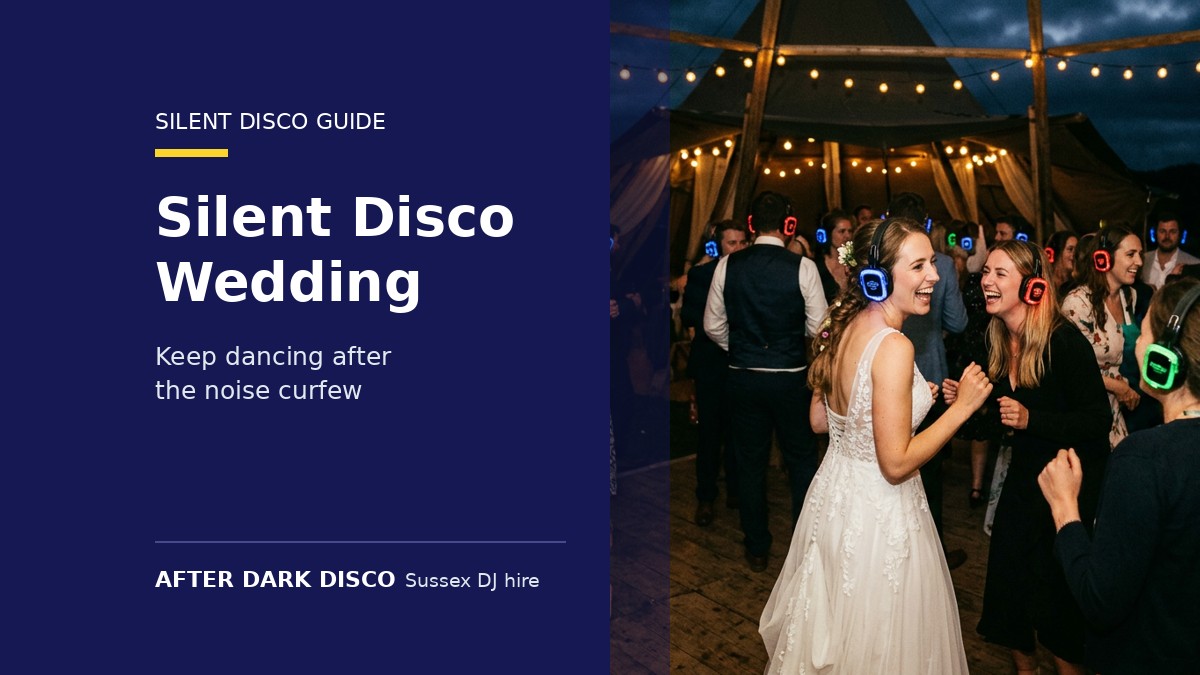
    From the outside, the room looks quiet. From the inside, it sounds like a nightclub. Each headset has glowing LEDs that change colour depending on the channel, so you can see which songs everyone is dancing to. It is a brilliant spectacle as well as a clever answer to a practical problem.

    My silent disco hire service uses three channel multi coloured headsets. You can read the full details on my silent disco hire page.

    Why Couples Choose a Silent Disco for Their Wedding

    There are four main reasons.

    Noise curfews. Many venues in Sussex stand in quiet countryside or close to neighbours. A lot of them have rules that bring amplified music to an end at a set time. Headphones let the party carry on without disturbing anyone.

    Different music tastes. A wedding brings together grandparents, school friends, work colleagues and young cousins. A silent disco lets each group pick a channel they love, so nobody has to compromise.

    Atmosphere. The glowing headsets look spectacular in photos and video. They also give shy guests a reason to join in, because dancing feels more private when you are wearing headphones.

    Fun and novelty. Guests remember it. A silent disco is a story people tell after the wedding.

    If you are not sure whether your venue has a curfew, ask early. It is one of the five questions I suggest every couple asks, and you can find the rest in my guide to the 5 questions to ask before hiring.

    How Does a Silent Disco Work?

    The setup is simpler than people expect.

    1. A transmitter sends music wirelessly to every headset in the room.
    2. Each headset has a switch that lets the wearer choose a channel.
    3. The LED ring on the headset glows red, green or blue to match the channel.
    4. A DJ or a pre built playlist controls what plays on each channel.
    5. Guests move freely around the room with a clear signal.

    With three channels you can run three different styles at the same time. A common wedding split looks like this:

    ChannelColourMusic Style
    1RedParty anthems and chart hits
    2GreenClassic disco, Motown and singalongs
    3BlueRock, indie and 90s favourites

    The best part is the moment guests realise they are all dancing to different songs, yet still dancing together. Somebody always shouts across the room “what are you listening to?” and the whole place laughs.

    Silent Disco Wedding Ideas: Three Ways to Use It

    You do not have to choose between a silent disco and a normal DJ. Most of my couples combine the two.

    Option 1: Silent Disco After the Curfew

    You enjoy the full DJ set with speakers until the venue cuts the sound. Then I hand out the headsets and the dancing carries on, sometimes for another hour or more. This is the most popular choice for weddings in rural venues.

    Option 2: Alternating Between Loud and Silent

    This is a clever twist. I play a few songs through the speakers, then switch to headsets for a couple of tunes, then back again. One couple I worked with enjoyed this so much that they said it moved seamlessly from one to the other and back again. Guests never get bored, because the format keeps changing.

    Option 3: A Full Silent Disco Evening

    Some couples go all in. Everyone gets a headset from the first dance onwards. This suits venues with strict noise rules, outdoor spaces such as marquees close to neighbours, and couples who simply love the idea. You can read a real example in the reviews on my reviews page.

    When Should You Introduce the Silent Disco?

    Timing matters. I recommend waiting until the dance floor is already lively. If you hand out headsets too early, guests treat them as a gimmick and wander off. If you wait until the speakers are about to be switched off, the transition feels exciting rather than forced.

    A simple evening plan might look like this:

    • 7pm to 8pm. Evening guests arrive. Background music plays.
    • 8pm. First dance, parent dances and the dance floor opens.
    • 8:30pm to 10:30pm. Full DJ set on the speakers.
    • 10:30pm. Short announcement, headsets are handed out.
    • 10:45pm to midnight. Silent disco with three channels.

    Adjust the times to fit your venue. My wedding timeline guide shows how all of this slots into the rest of your day.

    What Music Works Best on a Silent Disco?

    The best silent disco playlists give people a clear choice. If all three channels are playing something similar, guests drift towards the same one and the idea falls flat.

    I like to build each channel around a different mood. One channel plays current chart hits and party anthems. One plays classic disco, Motown and the songs your parents know by heart. One plays rock, indie and nineties favourites. When the energy dips on one channel, I can lift it with a song everyone knows.

    You can also use the channels to deliver surprises. A sing along on one channel, a throwback medley on another, or a short quiz for your guests. Silent discos reward a DJ who is paying attention, which is why I stay on the decks throughout rather than leaving a playlist running.

    If you are working on your own song list, my guide to wedding first dance songs and evening playlists is a good place to start.

    Silent Disco Wedding Venues in Sussex

    Almost any venue can host a silent disco, because the system needs very little space and no extra amplification. Here are the settings where I see it work best.

    Barns and converted farm buildings. Rural venues often have noise rules, and the wide open floors suit a headset dance floor perfectly.

    Marquees. A marquee carries sound easily across a field. Headsets keep the music contained and the neighbours happy.

    Country houses and historic homes. Many older buildings have strict limits. A silent disco lets you celebrate without worrying about sound limiters cutting the power.

    Hotels and golf clubs. Hotel function rooms are often close to guest bedrooms. Headsets let everyone dance while residents sleep.

    Outdoor spaces. A garden or courtyard is a lovely place for an after dinner silent disco, particularly in summer.

    I serve weddings across West Sussex, East Sussex, Surrey and Hampshire. Bring me your venue name and I will talk through what works there. My wedding DJ page has more about the full service.

    Practical Details to Plan Before the Day

    A silent disco is straightforward, but a few details help.

    Headset numbers. Plan enough headsets for the guests who are likely to dance. Not everyone will wear one at the same time, so you do not need one per person, but you do need a sensible number for your guest list.

    Hygiene. Headsets should be cleaned between uses. I handle this as part of the service.

    Charging. Batteries are charged before the event and managed carefully so the party never stops early.

    Floor space. Silent discos work in smaller rooms than you would expect, but guests like space to move. I will talk you through layout when we meet.

    Safety. All my equipment is PAT tested and fully insured. You can view the certificates on my PLI and PAT page.

    Non dancers. Not everyone wants a headset. Guests can sit and chat in the quiet, which is another bonus when older relatives want a peaceful corner.

    Combining a Silent Disco With Other Wedding Entertainment

    A silent disco sits well alongside other entertainment.

    My close up table magician keeps guests laughing and amazed during drinks receptions and evening changeovers. Uplighting makes the room glow, and the colours of the headsets then add a second layer of light once the dancing begins. You can read more about this in my post on uplighting and effects.

    If you want a full day service, I can look after your ceremony music, your wedding breakfast and your evening party. Take a look at my all day wedding services page for details. And if you are weighing up different entertainment options, my article on wedding DJ vs band explains how each choice affects the evening.

    Silent Disco Beyond Weddings

    The same system works brilliantly for other celebrations. I hire it out for milestone birthdays, anniversaries, corporate events and even children’s parties. If you are planning a family celebration, take a look at my party DJ hire page. For younger guests, my children’s disco hire service has plenty of ideas, and my kids disco party ideas guide shows how a silent disco can work for a younger crowd.

    A Sample Silent Disco Wedding Evening, Step by Step

    Here is how I usually guide a couple through the final stretch of the night, so you can picture it.

    Step 1: The announcement. Around ten minutes before the speakers go quiet, I tell the room that the party is about to change. A short, excited announcement works far better than a sudden switch, because guests know something good is coming.

    Step 2: The headset hand out. Helpers, ushers or the wedding party hand out the headsets, and I explain the three channels in one sentence. Within a minute the room is a sea of red, green and blue glow.

    Step 3: The big opener. I start every channel with a song that almost everyone knows. This gets people moving straight away and removes any hesitation about wearing headphones.

    Step 4: The channel battle. After a few songs I run a friendly challenge. Which colour can sing loudest? Which channel has the best chorus? Guests love comparing and teasing each other, and the energy lifts again.

    Step 5: The big finish. For the last song, I put every channel onto the same track, so the whole room dances together. Then I let everyone take off their headphones for one final chorus through the speakers if the venue allows it.

    This rhythm gives the silent disco a shape. It starts with curiosity, builds into competition and ends with unity.

    Photos, Video and the Glow Factor

    Couples sometimes ask whether silent discos look strange on camera. The answer is that they look fantastic. Photographers love the glowing headsets, because they add colour and movement to every shot. The room looks like a festival scene, and guests laugh and sing without any posing.

    If you want great photos, tell your photographer about the silent disco in advance. They can plan to capture the moment the headsets go on and the colours change. You can see how my lighting looks on camera in my picture gallery and on my videos page.

    Soft uplighting before the silent disco starts also helps. It makes the room warm and romantic, and it makes the glow of the headsets stand out even more.

    Mistakes to Avoid With a Silent Disco Wedding

    A few simple errors can dull the experience, but all of them are easy to avoid.

    • Starting too early. Wait until the dance floor is busy before you introduce the headsets.
    • Running too few channels. One channel feels like a normal disco with headphones. Three channels give guests choice.
    • Forgetting a quiet space. Some guests want to chat, so make sure there is a seating area away from the dancing.
    • No announcement. Guests need to know what is happening, or they may think the party has ended.
    • Ignoring the venue. Check the venue’s rules on lighting, finishing time and guest numbers in advance.

    Common Questions Couples Ask About Silent Discos

    Will guests really want to wear headphones? Almost always, yes. The LED glow and the novelty draw people in. A good DJ makes the first few minutes fun, and the rest looks after itself.

    Does a silent disco replace the DJ? No. It works best when the DJ runs the whole evening, including the loud set, and then guides the headsets. I stay on the decks all night.

    Can older guests join in? Absolutely. I place a classic channel on every set so grandparents can dance to songs they know. Many love the headphones because the volume is easier to control.

    Is it weird to have a silent disco at a wedding? Not at all. Plenty of couples now include one, and most guests say it was the highlight of the night.

    Frequently Asked Questions

    What is a silent disco wedding?

    A silent disco wedding is a reception where guests dance wearing wireless headphones. Each headset picks up music from a transmitter, and guests choose between channels. It lets the party continue after a venue’s noise curfew.

    How many channels does a wedding silent disco have?

    My system uses three channels, each shown by a different LED colour. That gives guests a choice between party anthems, classics and rock or indie, depending on the playlist.

    Can I have a silent disco and a normal DJ?

    Yes. Most couples do both. A normal DJ set on the speakers is followed by a silent disco, or I alternate between the two throughout the night.

    Can a silent disco keep going after the venue’s noise curfew?

    Usually yes, because the music is only audible through the headsets. Always check your venue’s rules about finishing times, lighting and guest numbers, and tell me what the venue allows so I can plan around it.

    How long should a wedding silent disco last?

    Between 60 and 90 minutes works best. That is long enough for guests to get properly into it and short enough that it stays exciting. If your venue allows, I can run longer.

    Do I need a silent disco for a small wedding?

    Not necessarily, but it works well for small groups too. A smaller crowd can enjoy the novelty more, because everyone joins in together.

    Keep the Party Going

    A silent disco wedding turns the end of the night into another highlight. The venue stays peaceful, the neighbours stay happy and your guests keep dancing under a glow of red, green and blue.

    If you would like to add a silent disco to your wedding in Sussex, Surrey or Hampshire, call me on 01903 741025 or 07816 344543. You can also send your date, venue and guest numbers through my contact page and I will reply with a quote within 24 hours.